Problems NRIs Face During Property Management in India
For many Non-Resident Indians (NRIs), buying property in India is more than just an investment. It’s often connected to emotions, family roots, and future plans of returning home. However, managing that property while living thousands of miles away can become surprisingly difficult.
From dealing with tenants to handling paperwork and maintenance, property management can quickly turn stressful when you’re not physically present. Many NRIs initially assume their property will take care of itself or that relatives can handle everything. But in reality, unexpected issues can arise.
In this article, we’ll look at the most common problems NRIs face during property management in India.
1. Monitoring Property From Another Country
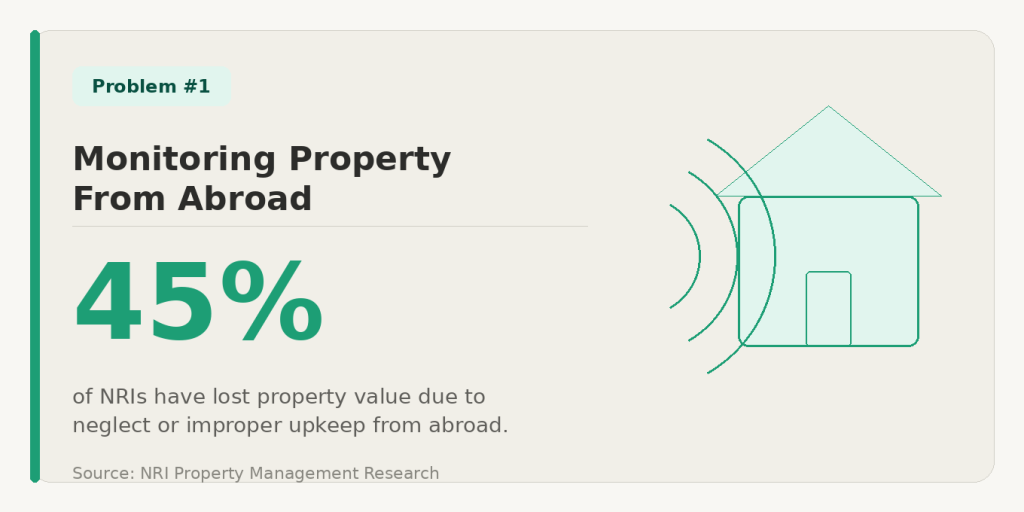
For many NRIs, keeping track of their property in India while living abroad can be a constant concern. When you are located thousands of miles away, it becomes difficult to stay updated about what is happening at your property on a regular basis.
In the absence of the owner, even small problems may go unnoticed. Over time, these minor issues can grow into larger and more expensive problems simply because no one was there to identify them early.
Common Issues NRIs Face
- No regular property inspection
Since most NRIs cannot travel to India often, they are unable to personally inspect their property and check its overall condition. - Delayed detection of damage
Issues such as water leakage, electrical problems, or structural damage may remain undetected for long periods. - Security concerns
Properties that remain vacant for extended periods can sometimes attract trespassing or misuse if they are not regularly monitored. - Difficulty verifying property usage
Owners may find it challenging to confirm whether tenants or caretakers are maintaining and using the property responsibly. - Lack of real-time updates
Without a reliable person regularly checking the property, many NRIs have to depend on occasional updates from neighbors or relatives.
2. Complicated Legal and Documentation Processes
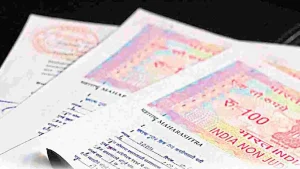
Handling property-related legal work in India can be challenging for many NRIs. When you are living in another country, managing paperwork, legal procedures, and government requirements from a distance often becomes stressful and confusing. Even simple tasks may require multiple follow-ups, local visits, or understanding rules that may be unfamiliar.
Many NRIs also struggle with coordinating everything remotely. Calling overseas customer support, understanding changing regulations, or relying on different local agents can make the process feel overwhelming. For those whose ageing parents are managing the property in India, the responsibility can become even more difficult.
Real story : The Punjab and Haryana High Court recently flagged a surge in NRI property fraud cases. Justice Harpreet Singh Brar noted that “unscrupulous individuals take advantage of NRIs, particularly those unable to visit India frequently.” The Tribune in one case, prime land in Ludhiana worth ₹6 crore was illegally sold for just ₹30 lakh using forged documents.
🔗 Link: The Tribune — Punjab & Haryana HC on NRI Property Fraud
Common Issues NRIs Face
- Missing or misplaced property documents
Important documents such as sale deeds, ownership records, or registration papers may not always be easily accessible when they are needed. - Property ownership disputes
Sometimes properties have complicated ownership histories or disagreements between family members or other parties. - Delays in registration or transfer procedures
Certain government processes can take longer than expected, especially when the owner is not physically present in India. - Difficulty understanding local legal rules
Property laws and procedures can vary from state to state, making them difficult to understand for someone living abroad. - Challenges managing everything remotely
With India rapidly developing and cities changing quickly, staying updated about property regulations, documentation, and market practices from another country can be difficult.
3. Difficulty Finding Trustworthy Tenants
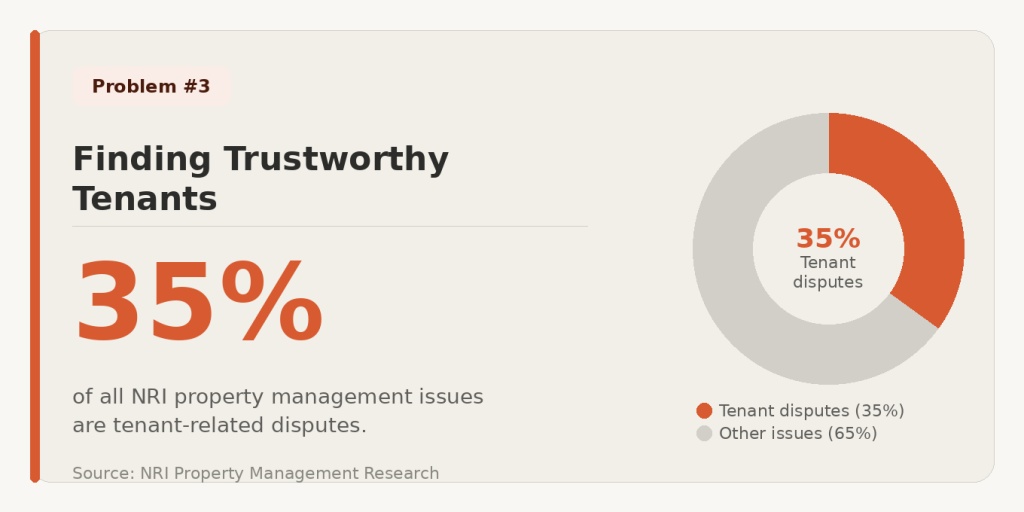
For many NRIs, renting out their property in India seems like a practical option to keep the house occupied and generate income. However, finding tenants who are reliable and responsible can be a challenging process, especially when the owner is managing everything from another country.
Without being physically present, it becomes harder to verify tenants properly or handle problems quickly. As a result, even small tenant-related issues can become stressful for owners living abroad.
Common Issues NRIs Face
- Delayed or irregular rent payments
Some tenants may delay rent payments or fail to pay on time, which can create uncertainty and financial stress for the owner. - Poor property maintenance
Not all tenants maintain the property carefully, and over time this can lead to damage or deterioration that the owner may not immediately notice. - Tenants refusing to vacate
In certain situations, tenants may hesitate or refuse to vacate the property even after the rental agreement has ended, creating legal and logistical complications. - Lack of proper tenant verification
Without a thorough background check, renting to the wrong tenant can lead to long-term issues for the property owner. - Difficulty handling disputes remotely
Resolving tenant concerns, complaints, or disagreements becomes much more complicated when the owner is managing everything from overseas. - Risk of fraudulent property agents
NRIs sometimes have to rely on brokers or agents, and unfortunately not all of them operate transparently. - Dependence on ageing parents or relatives
In many cases, elderly parents or family members end up handling property matters, which can be stressful for them.
4. Property Maintenance Problems
Every property needs regular care to stay in good condition. For NRIs, however, maintaining a home in India while living abroad can be difficult. When a house remains unattended for long periods, even small maintenance issues can slowly turn into costly repairs. What once felt like a safe and well-kept home can become a source of concern simply because no one is there to notice problems early.
Over time, the lack of regular supervision may cause the property’s condition to decline without the owner even realizing it.
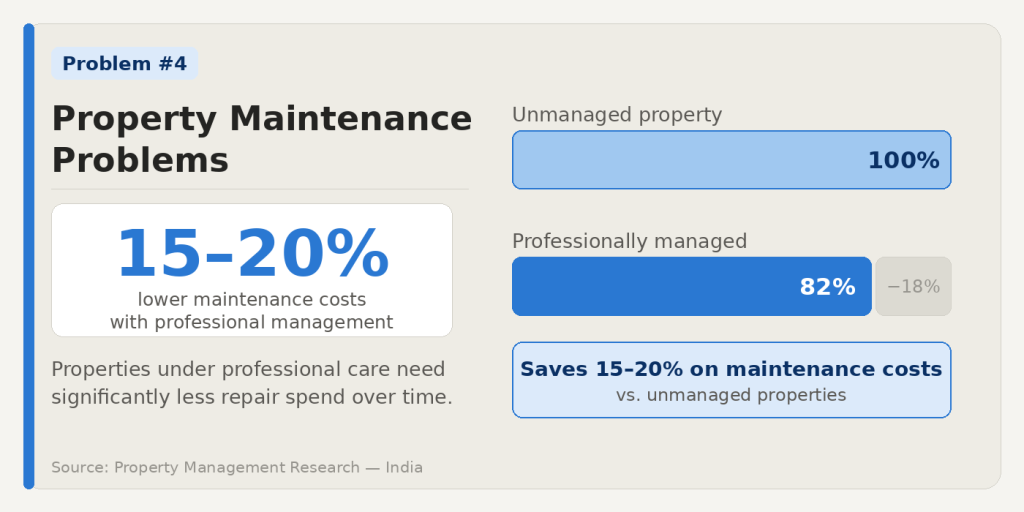
Common maintenance issues include:
- Plumbing leaks
Minor leaks in pipes or bathrooms may go unnoticed for weeks or months, eventually leading to water damage. - Electrical problems
Faulty wiring or electrical issues can develop over time and may pose safety risks if not addressed quickly. - Pest infestations
Vacant properties are more likely to attract pests such as termites or rodents, which can damage furniture and interiors. - Structural wear from weather or aging
Exposure to weather conditions and natural aging can cause cracks, dampness, or other structural problems.
Since many NRIs cannot visit India frequently, these issues often remain unnoticed for a long time. By the time they are discovered, the damage may already require significant repairs and expense.
5. Managing Property Taxes and Utility Bills
Owning a property in India also comes with regular financial responsibilities. For NRIs living abroad, keeping track of these payments can sometimes become challenging. Time zone differences, unfamiliar online systems, and limited access to local information can make it harder to stay updated with due dates and payment procedures.
When these tasks are not managed on time, even small delays can lead to penalties or service interruptions, adding unnecessary stress for owners who are already managing everything from a distance.
Common Payment Responsibilities
- Property tax
Local property taxes must be paid regularly, but many NRIs may not always receive timely reminders or updates about due dates. - Electricity bills
If electricity bills remain unpaid, services may be disconnected, and reconnecting them later can take additional effort. - Water charges
Municipal water bills or supply charges also require regular monitoring and payment. - Apartment or society maintenance fees
In gated communities or apartment complexes, monthly or quarterly maintenance fees are necessary to keep the property services running smoothly. - Municipal service payments
Other local charges such as waste management or municipal services may also apply depending on the location.
In many cases, NRIs depend on friends, relatives, or neighbors to handle these payments on their behalf. However, relying on informal arrangements may not always be consistent or dependable over the long term.
6. Risk of Property Encroachment
For NRIs, leaving a property vacant for long periods can sometimes create another serious concern—illegal occupation or encroachment. When a house or plot appears unattended, it may attract individuals who try to occupy or misuse the space. From abroad, it can be very difficult for owners to notice such situations early or respond quickly.
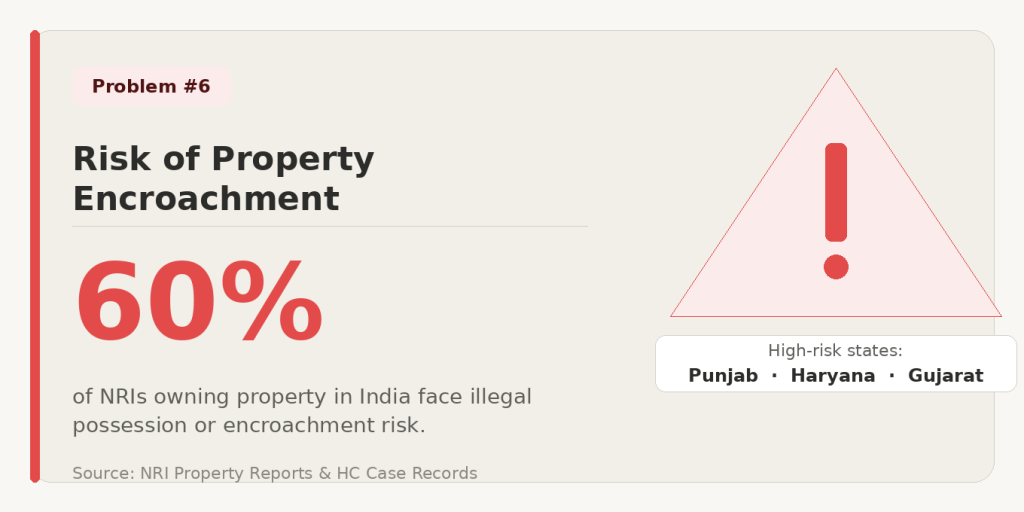
Situations that increase this risk include:
- Long-term vacant property
When a property stays empty for months or years, it can appear abandoned to outsiders. - Lack of regular supervision
Without someone checking the property frequently, unauthorized activities may go unnoticed. - Properties in developing or isolated areas
Plots located on the outskirts of growing cities or in less populated areas may face higher risk of encroachment.
Recovering a property once it has been occupied illegally can involve complicated legal procedures, multiple visits to local offices, and significant time — something that becomes especially stressful for NRIs managing the issue from overseas.
7. Lack of Reliable Local Support
In the beginning, many NRIs rely on relatives, neighbors, or friends to occasionally check on their property. While this help is often well-intentioned, managing a property requires consistent attention and local knowledge, which informal support may not always provide.
Over time, depending only on occasional help can create practical difficulties for property owners living abroad.
Common Problems With Informal Support
- Delays in maintenance or repairs
Small problems may not be addressed quickly because the property is not someone’s primary responsibility. - Inefficient tenant handling
Screening tenants, collecting rent, or resolving tenant issues can become complicated without proper oversight. - Missed tax payments or legal updates
Important notices or deadlines related to property taxes or regulations may sometimes be overlooked. - Improper document management
Property papers and agreements may not always be stored or handled carefully. - Limited accountability
When responsibilities are informal, it can be difficult to track tasks or ensure that property matters are handled properly.
Conclusion
Owning property in India can be valuable for NRIs, but managing it from abroad often brings practical challenges. Monitoring the property, handling legal paperwork, managing tenants, and maintaining the home can become difficult without reliable local support.
Guardia helps NRIs manage their property in India through regular inspections, maintenance coordination, and timely updates, allowing owners to stay informed and keep their property secure even while living overseas.
Relevant Blogs— You may also find these blogs helpful:
Why Choose Guardia: Maintaining NRI Assets in India
NRI Property Management: Complete Stress-Free Guide
What NRIs Should Do When Visiting India to Manage Property
Sources:-
- NRI Legal World — NRI Property Management Challenges
https://www.nrilegalworld.com - The Tribune — Punjab & Haryana HC on NRI Property Fraud
https://www.tribuneindia.com